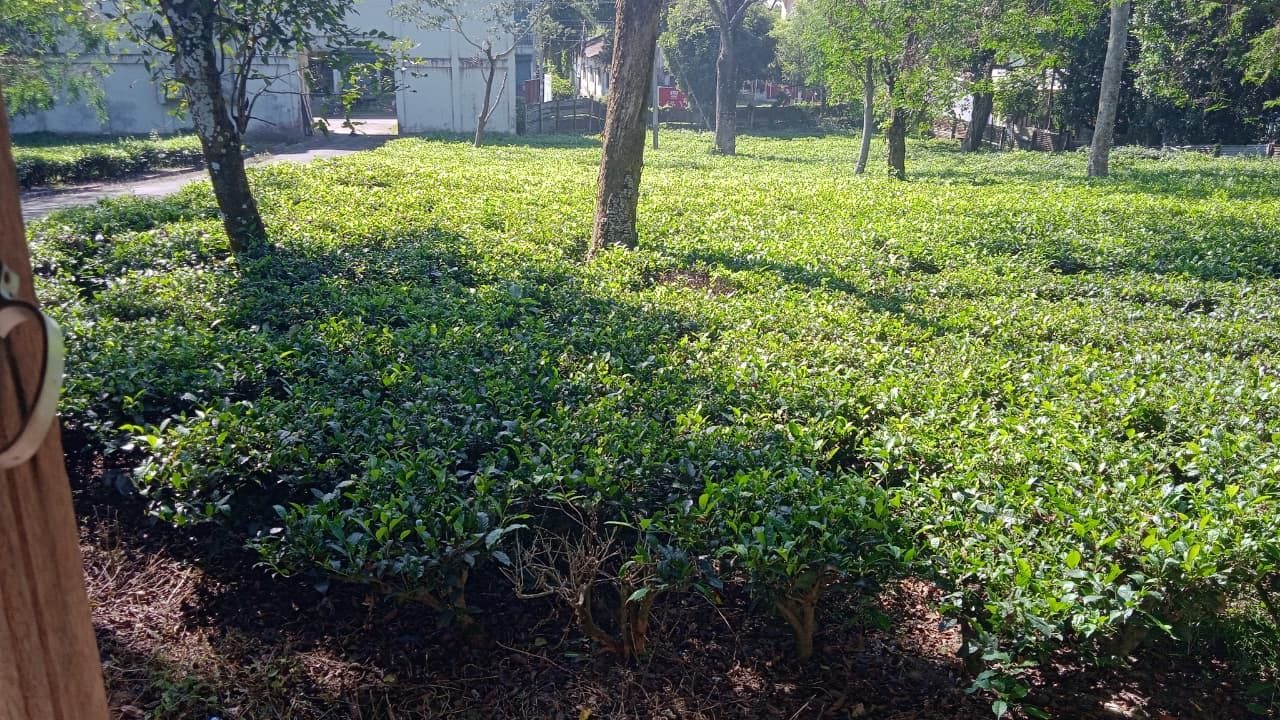
Sabroom, October 28: Mounting debt, administrative instability and a shortage of experienced personnel have pushed the historic Leelaghar Tea Estate in South Tripura’s Sabroom subdivision into a deepening crisis, raising concerns over its production, management and the livelihoods of hundreds of workers.
The estate is reportedly burdened with nearly Rs 2 crore in debt. The mass resignation of management committee members, pending employee dues, allegations of financial irregularities and disputes over land have further complicated its situation.
Locally known as ‘Lalu Karta’s Tea Estate’, the garden is believed to have been established by Brajendrakishore Debbarman, a member of the erstwhile royal family. On March 11, 1961, it came under the management of a workers’ cooperative society. It is currently operated by the Leelaghar Tea Estate Workers’ Cooperative Society Limited, registered under number 308.
Spread across approximately 137.40 hectares, the estate reportedly has around 110.15 hectares of productive land. Sources also said that another 35 hectares had recently been brought under tea cultivation. Around 300 permanent workers, including 11 office staff, are associated with the estate, while 42 employees are reportedly covered under the Provident Fund scheme.
Administrative uncertainty deepens
The management crisis intensified after all nine members of the previous management committee resigned. Subsequently, the Sub-Divisional Cooperative Office appointed Hiralal Das as administrator on May 9, 2026. He later formed a five-member committee led by estate employee Jiban Roy.
However, the committee’s capacity to handle the estate’s financial and administrative challenges has come under concern, as its members primarily have field-level experience. Workers have also raised questions over the delay in holding elections for a new management board, demanding an elected body to ensure stable administration.
The departure of experienced personnel has added to the difficulties. Ratan Hazari, who had long been associated with administrative responsibilities, retired on January 31 this year. Allegations that he did not properly hand over his responsibilities before retirement have also surfaced.
Another employee, Shibu Nath, reportedly resigned in August due to health issues. His gratuity amounting to around Rs 1.65 lakh remains unpaid. Administrator Hiralal Das attributed the delay to the estate’s financial difficulties, stating that payment could not be made immediately.
Meanwhile, allegations of financial irregularities have been levelled against former secretary Laxman Singh. His response was not available.
Land disputes add to concerns
Apart from the financial and administrative challenges, the estate is also facing disputes over its land. Allegations have been made that portions of the property have been encroached upon by local residents and that rubber cultivation has taken place on land earmarked for tea plantations.
A recent confrontation between workers and local residents over the disputed land has reportedly led to legal proceedings, further complicating efforts to protect the estate’s resources.
Committee head Jiban Roy said the members primarily work as field staff and lack the administrative experience required to manage the estate’s affairs effectively. He stressed the need for intervention by the Cooperative Department to address the problems.
With mounting debt, pending employee dues, land disputes and uncertainty over management, the future of the historic tea estate remains a concern. Early intervention, transparent financial management, the appointment of experienced personnel and timely elections to constitute a new management board are seen as crucial to restoring stability and protecting the livelihoods of workers dependent on the estate.