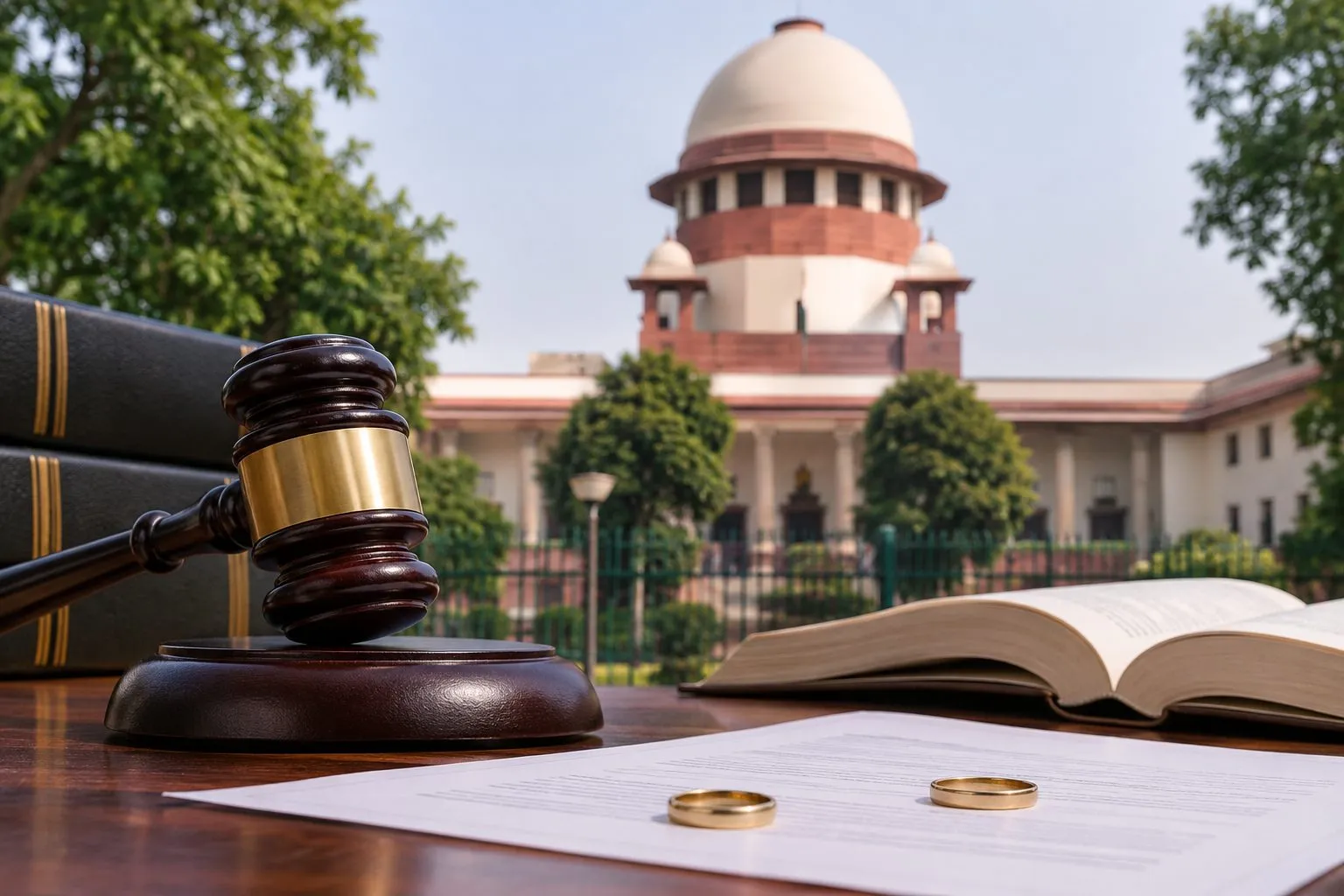
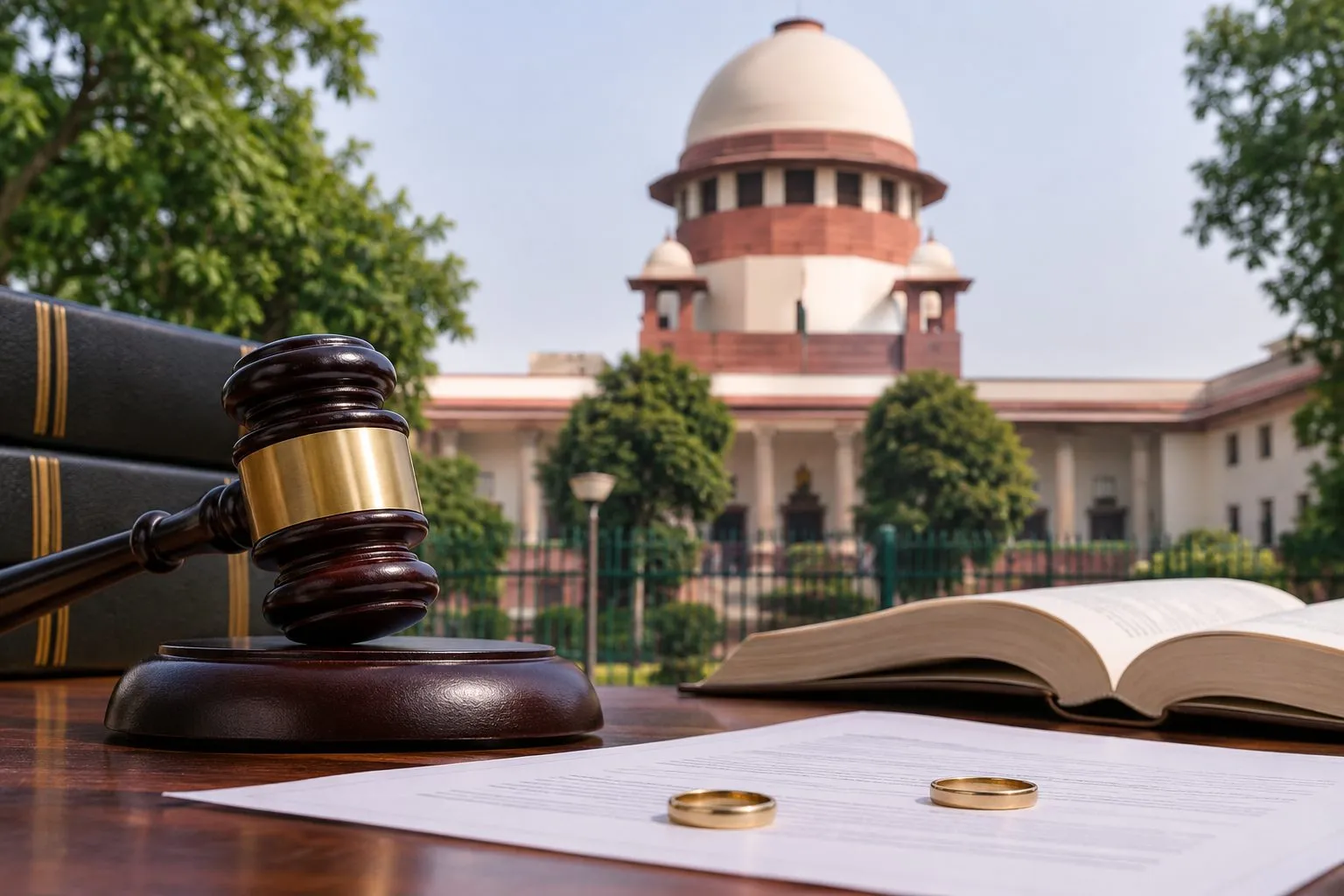
A marriage is not just a legal document or a relationship that can be ended by signing a few papers. It carries emotions, responsibilities and legal rights that cannot simply be ignored. Reinforcing this principle, the Supreme Court of India has held that a divorce granted by a foreign court on the ground of irretrievable breakdown of marriage cannot automatically be recognised as valid in India when that ground is not recognised under the applicable Indian matrimonial law. In a significant ruling on November 3, 2026, a bench of Justices Prashant Kumar Mishra and Sree Chandrashekhar refused to quash bigamy proceedings against a man who had relied on a UK court's divorce decree to marry again. The man had obtained British citizenship and secured a divorce in the United Kingdom after his attempt to end his first marriage in India had failed. However, the Supreme Court made it clear that changing citizenship or obtaining a foreign divorce does not give anyone the right to bypass Indian matrimonial laws. The central issue was the legal recognition of the foreign divorce. The court observed that the ground of irretrievable breakdown of marriage is not a statutory ground for divorce under the Hindu Marriage Act, 1955. Therefore, a foreign decree based on this ground, where the conditions under Section 13 of the Code of Civil Procedure are not satisfied, cannot be treated as automatically binding in India. The ruling also carries serious implications for the protection of a spouse's legal rights. If one partner obtains a divorce abroad without the other effectively submitting to the foreign court's jurisdiction, the decree may not be recognised by Indian courts. A person cannot simply use such a decree as a legal shield to justify a second marriage while the first marriage remains legally recognised in India. The Supreme Court allowed the bigamy proceedings against the husband to continue, although it quashed the criminal proceedings against his parents and second wife. This distinction is important: the ruling did not declare everyone involved guilty, but allowed the legal case against the husband to proceed. At the heart of this judgment lies a simple but powerful message: justice cannot be replaced by a convenient legal shortcut. A relationship may have broken down emotionally, and two people may no longer wish to live together, but its legal consequences must still be addressed through the law that governs their marriage. The judgment is also a reminder that international borders do not automatically erase legal responsibilities created in India. For anyone facing a failed marriage, the path towards separation must respect the rights of both partners.
A Marriage Cannot Be Erased by a Foreign Court: Supreme Court Draws the Line on Divorce Justice
A foreign divorce decree may end a marriage on paper, but does it automatically end it under Indian law? The Supreme Court's latest ruling brings this important question into focus.
Photos (1)