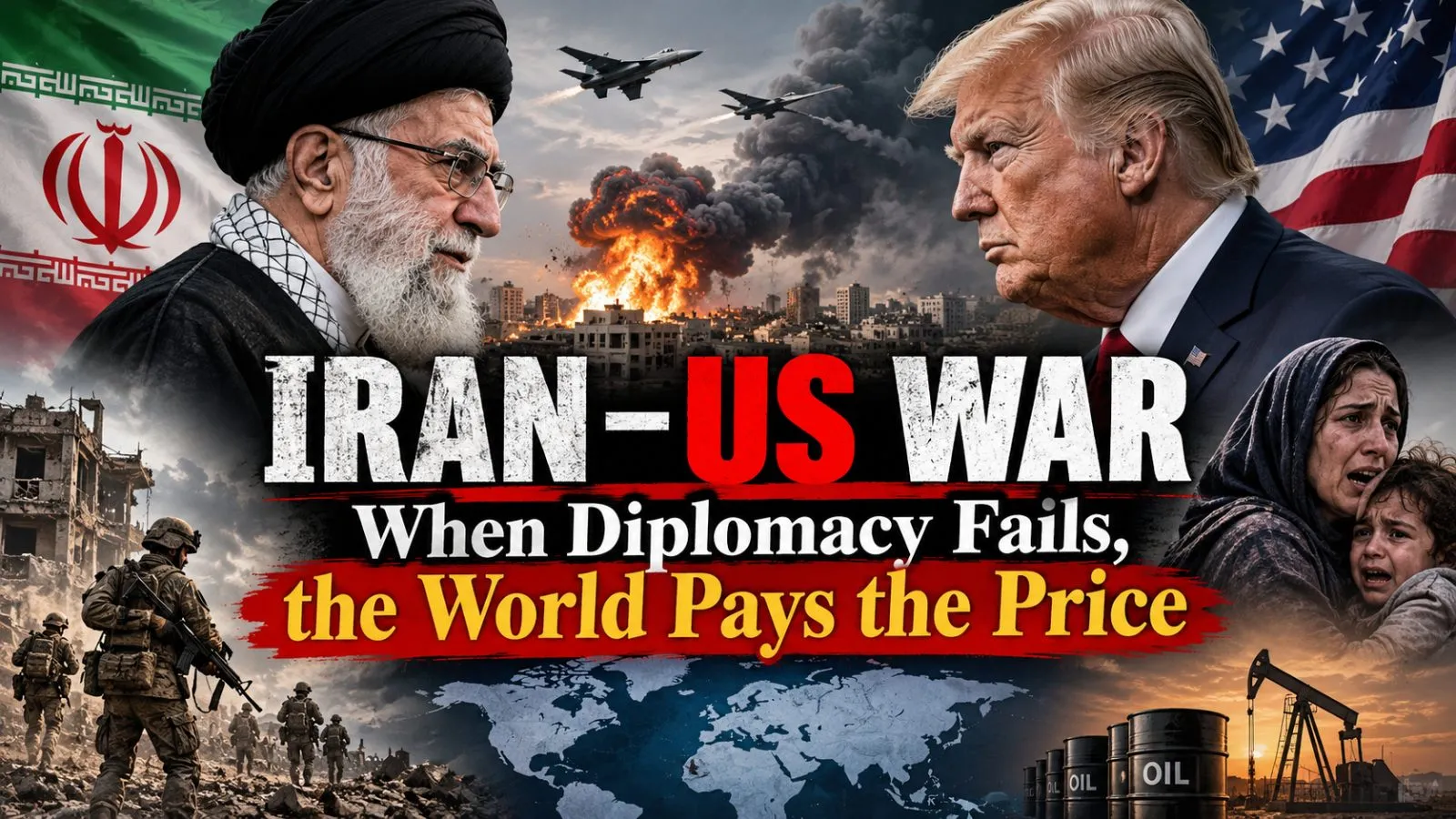
A war may begin between two nations, but its consequences rarely remain within their borders. The ongoing conflict involving Iran, the United States and Israel has become a major international concern, with its impact reaching far beyond the Middle East. What began with military strikes has developed into a wider struggle involving political power, national security, energy supplies and the future of international diplomacy. The conflict began on February 28, 2026, when the United States and Israel launched military strikes against Iran, targeting its military infrastructure and nuclear-related facilities. Iran responded with attacks on Israeli and US-linked targets in the region. The confrontation soon created serious concerns among neighbouring Gulf countries, which found themselves facing the risks of a conflict they did not choose. One of the most important points in this conflict is the Strait of Hormuz, a narrow waterway connecting the Persian Gulf with the Gulf of Oman. It is one of the world's most important routes for transporting oil and gas. A large share of international oil shipments normally passes through this route. Any disruption can affect energy supplies, increase transportation costs and create uncertainty in international markets. The consequences are not limited to oil-producing countries. India, which depends heavily on imported crude oil, is also exposed to the effects of instability in the region. When oil supplies become uncertain, prices can rise, putting pressure on fuel costs, transportation, industries and household budgets. A conflict taking place thousands of kilometres away can therefore influence the daily expenses of an ordinary Indian family. The situation has become more complicated as diplomatic efforts continue alongside military threats. On November 1, Iranian representatives held talks with Qatari mediators in Doha in an attempt to find a way towards ending the conflict. However, the discussions ended without a breakthrough. On November 2, Iran said that communication through mediators was continuing and presented a revised proposal that included reopening the Strait of Hormuz and addressing the US blockade and sanctions. Washington has not accepted the proposal. US President Donald Trump has continued to warn that military action remains an option if an agreement is not reached. Meanwhile, Iran has indicated that it is prepared to continue its resistance if the conflict escalates again. Reports of threats to shipping in the Strait of Hormuz have added to concerns over the safety of international trade. Beyond the political statements and military developments, it is ordinary people who face some of the heaviest consequences. Families living in conflict-affected areas face insecurity, displacement and the fear of losing loved ones. Workers, businesses and traders face uncertainty, while rising energy and transportation costs can affect people even in countries far away from the fighting. The conflict also raises serious questions about the role of global powers. The United States seeks to protect its security interests and restrict Iran's nuclear ambitions, while Iran considers its sovereignty, security and regional influence central to its position. Israel views Iran's military and nuclear capabilities as a major security threat. These competing interests have made a peaceful settlement difficult. For India, the situation demands careful diplomacy. New Delhi has important relations with Iran, Israel, the United States and the Gulf countries. It also has economic and energy interests across the region, as well as the safety of Indian nationals working and living there to consider. India must therefore balance its diplomatic relationships while supporting regional stability and the peaceful resolution of disputes. The question now is not simply which country will emerge stronger. It is whether the international community can prevent another escalation and bring the parties towards a lasting agreement. Military strength may influence the course of a conflict, but it cannot by itself guarantee peace.
The Price of Power: When Iran and America put the World on edge
As tensions rise,the world faces the cost of another crisis.