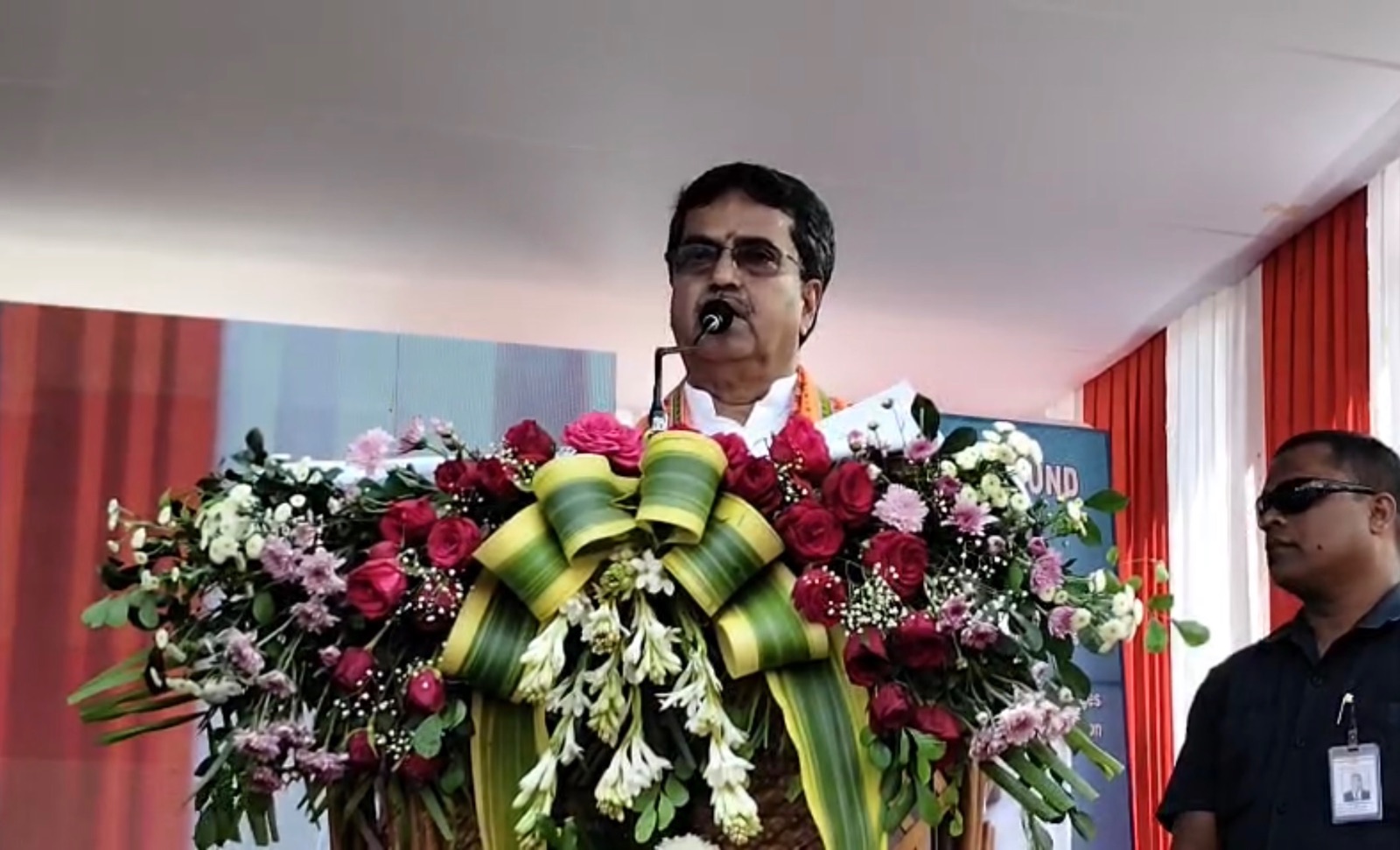
Agartala, October 29, 2026: Weather-related power disruptions in Agartala could decline by nearly 99 per cent with the introduction of an underground cabling system, Chief Minister Professor Dr Manik Saha said on Thursday while inaugurating two major electricity infrastructure initiatives in the state capital.
The Tripura State Electricity Corporation Limited (TSECL) performed the groundbreaking ceremony for the Agartala Underground Cabling Project and formally launched the Utility Duct Aggregation Model Project, aimed at improving electricity supply, reducing electrical hazards and enhancing the city’s appearance.
Addressing the gathering, Dr Saha said the projects were the result of sustained efforts by the state government and TSECL and reflected a long-standing public demand. He said shifting overhead electrical wires underground would reduce the risk of snapped wires, short circuits and other electrical accidents, particularly during storms and heavy rainfall.
The Chief Minister said the initiative would also help remove electrical poles and tangled wires from roadsides, making Agartala cleaner and more visually appealing while creating additional roadside space. Improved power infrastructure would benefit households as well as industries, businesses, educational institutions and healthcare facilities, he added.
The projects will incorporate smart-grid technology, real-time monitoring and load management systems to improve the efficiency and reliability of electricity distribution. Underground drilling methods are planned for cable installation to minimise road excavation and reduce inconvenience to residents and commuters.
Power Minister Ratan Lal Nath, Tripura Assembly Deputy Speaker Ramprasad Paul, Rajya Sabha MP Rajib Bhattacharjee and other dignitaries attended the programme.
Rooftop solar plants planned for 1.5 lakh families
Dr Saha also highlighted the state government’s plan to expand rooftop solar power under the Centre’s PM Surya Ghar: Muft Bijli Yojana, with a focus on economically weaker and low-income households.
According to the Chief Minister, around 1.5 lakh families in Tripura are planned to receive rooftop solar plants with a capacity of one kilowatt each. The installation costs for eligible households would be covered through central assistance and support from the state government and TSECL.
Under the arrangement outlined at the programme, beneficiaries would have to pay a security deposit of Rs 1,000, refundable after 10 years. TSECL would be responsible for the ownership and maintenance of the solar plants during the initial 10-year period, after which the arrangements would be transferred to the consumers.
The Chief Minister said the government was working to build electricity infrastructure that could meet present-day needs while providing a safer, more reliable and sustainable power network for future generations.
He added that Tripura had continued to strengthen and modernise its electricity infrastructure over the past eight years, with a focus on improving safety, expanding coverage and ensuring reliable power supply.