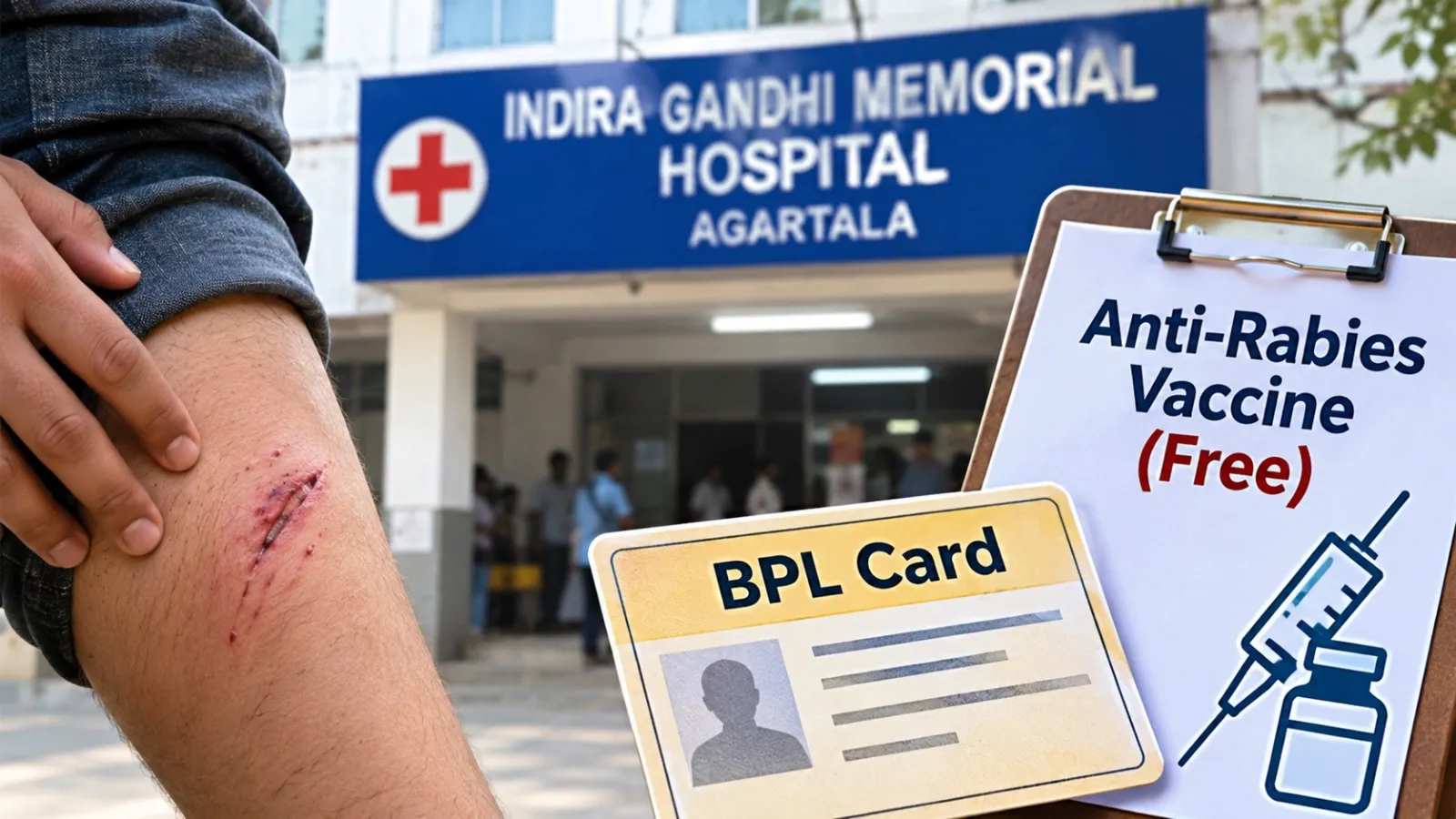
Agartala: A dog bite can become a life-threatening emergency if timely medical attention is not provided. Rabies is a preventable viral disease, but it is almost always fatal once symptoms appear. Immediate post-exposure vaccination is therefore essential to prevent the disease. However, a recent incident at Agartala’s Indira Gandhi Memorial (IGM) Hospital, where a patient was asked to produce a Below Poverty Line (BPL) card to receive a free anti-rabies vaccine, has raised serious concerns over access to emergency healthcare. India’s National Rabies Control Programme (NRCP) and the National Free Drug Initiative aim to ensure the availability of essential medicines, including anti-rabies vaccines, through public healthcare facilities. The provision of free vaccines is particularly important for people who cannot afford treatment at private healthcare facilities. The reported practice at IGM Hospital of making BPL cards a condition for receiving vaccines from hospital stocks raises questions about whether access to emergency healthcare should depend on the immediate availability of a physical document. A person arriving at a hospital immediately after a dog bite may not necessarily have a BPL card with them. In such circumstances, should the absence of a physical card prevent a patient from receiving an essential vaccine?
The situation becomes more concerning as, in this case, the attending doctor reportedly failed to guide the patient’s family properly and directed them to purchase the vaccine from private pharmacies outside the hospital premises because they did not have the physical card at that moment. The family could have submitted the required document during a subsequent follow-up visit. Directing patients to private pharmacies during an emergency, however, places an unnecessary financial burden on them.
When contacted regarding the matter, the Medical Superintendent (MS) of IGM Hospital stated that the hospital operated under a monthly quota of 300 free vaccines. The MS stated that the patient could still receive the vaccine free of cost upon producing BPL proof. However, the practice of restricting access through monthly quotas or BPL-based eligibility requirements needs to be examined in the context of applicable national public health guidelines. Emergency care should not be compromised by administrative procedures, particularly when timely vaccination can prevent a potentially fatal disease. Government hospitals are expected to provide accessible and affordable healthcare, especially during medical emergencies. Administrative requirements should not become obstacles to essential treatment. Patients seeking anti-rabies vaccination should not have to purchase vaccines from private pharmacies simply because they cannot produce a BPL card at the time of their hospital visit.
The health authorities must examine the issue at IGM Hospital and ensure that patients receive timely access to anti-rabies vaccines without unnecessary bureaucratic hurdles. When it comes to preventing rabies, immediate medical attention must take priority over paperwork.